Quick answer
Start by listing what stays, what goes and what needs secure disposal. Then check access, parking, lift use, IT removal and any deadlines so the clearance can be done with minimal disruption.
Start with a clear plan
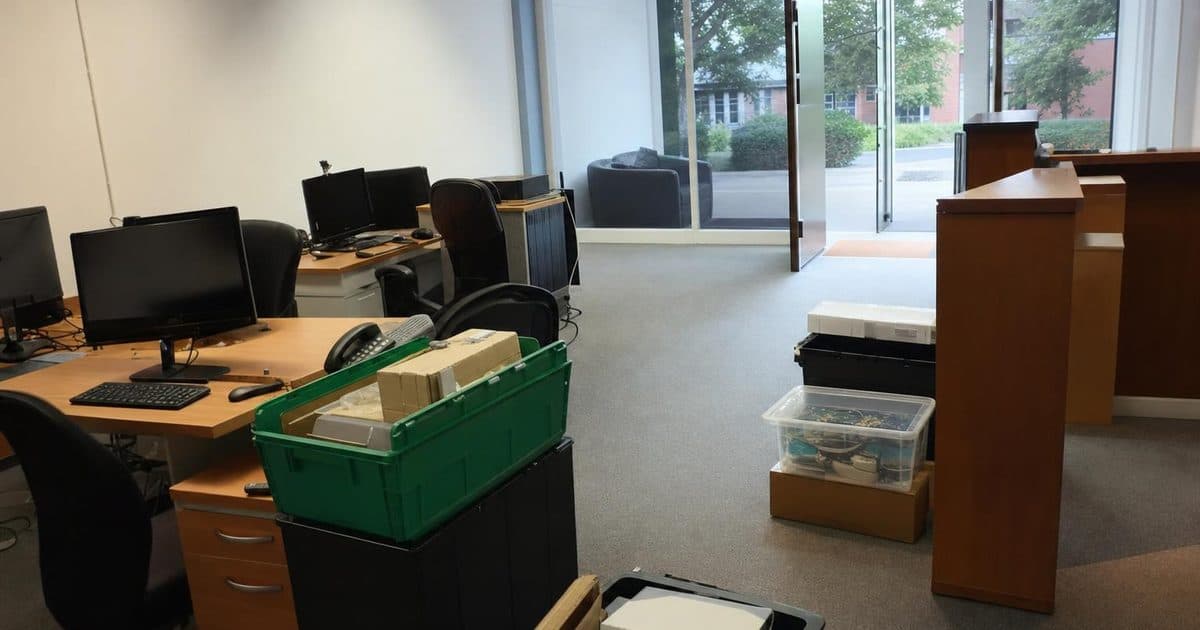
Whether you are moving to new premises in Eastleigh or closing an office altogether, the easiest clear-out is one that starts with a simple plan. Walk through each room and note the main categories of items you have to deal with. This makes it easier to decide what can be reused, what can be donated or sold, and what should be removed as waste.
It also helps to assign responsibilities early. One person can oversee furniture, another can manage paperwork, and someone else can handle computers, phones and other equipment. If several teams share the same space, ask each one to label their own items before the clearance begins.
Sort items by category
Breaking the job into categories keeps the process manageable. It also reduces the risk of important items being mixed in with general rubbish. In most office clearances, the main groups are furniture, IT equipment, paperwork, kitchen items and general waste.
Furniture and fixtures
Desks, chairs, storage units, meeting tables and reception furniture should be checked first. Decide what is going to the new premises, what can be reused elsewhere, and what is no longer needed. If the furniture is still in usable condition, Furniture Removal may be a suitable option for larger items that need to be taken away safely.
Paperwork and office waste
Old files, archived documents, packaging, mixed office rubbish and broken accessories can build up quickly. Keep paperwork separate until you are sure it is ready for disposal or archiving. Shredding and secure disposal may be needed for sensitive records, while general office waste can often be removed as part of a wider Commercial Waste Removal service.
| Item type | What to do |
|---|---|
| Desks and chairs | Keep, reuse, donate or arrange removal |
| Paper files | Archive, shred or dispose securely |
| Computers and monitors | Back up data, wipe devices and use specialist disposal |
| General rubbish | Bag separately and book collection |
Handle IT equipment and data securely
IT kit needs careful handling because it often contains sensitive information as well as valuable components. Before anything is unplugged, make sure files have been backed up and accounts have been transferred or closed. Computers, servers, monitors, printers, routers, phones and cables should be gathered together so nothing is left behind by mistake.
If you have old electronics that are no longer needed, it is sensible to separate them from ordinary office waste. A specialist E Waste Disposal service can help remove items such as laptops, screens and peripherals in a way that is more suitable than putting them in general rubbish.
Remove data and access properly
Before devices leave the building, make sure all user accounts, passwords and access permissions are reviewed. Keep a simple checklist for each device so nothing is overlooked. This is especially useful when several staff members use the same equipment or when an office has been shared by different teams.
If there are leased items, rented printers or specialist systems, check what needs to be returned and what can be removed by the clearance team. Keeping a clear record of serial numbers and destinations can save time later.
Check building access and timing
In Eastleigh, office buildings can vary a lot in layout, parking access and loading arrangements. Before the clearance day, check whether there are stairs, lifts, security codes, time restrictions or limited parking spaces. It helps to know how close the vehicle can get to the entrance and whether heavy items need to be moved across a shared lobby or corridor.
Timing matters too. Try to avoid busy reception periods, customer appointments or deliveries if possible. If you are moving out of a business unit, speak to building management early so any access rules are clear.
Create a simple day plan
A short schedule can make the job much smoother. Start with the items that take the longest to move, then work through smaller items and loose waste. If several rooms are involved, clear one area at a time so the space stays organised.
- Confirm the clearance date and time.
- Reserve lift or loading access if needed.
- Mark items that are staying, moving or being disposed of.
- Keep valuables and personal belongings separate.
- Set aside paperwork and IT equipment for final checks.
Arrange disposal and removal
Once everything is sorted, decide how each category will leave the site. Some offices only need a few bulky items taken away, while others need a full clearance of desks, storage, electronics and mixed waste. If the office is being emptied completely, using a dedicated Office Clearance service can keep the process straightforward.
For large or mixed loads, it is often easier to have one team remove the waste rather than trying to organise several separate collections. This is especially useful when you need old furniture, packaging and broken items cleared before handover.
Where a business has lots of surplus stock, archived paperwork or general clutter from a long-occupied space, a wider Rubbish Removal service may also be helpful. The key is to keep recyclable items, electronics and general waste separated where possible so the clearance is easier to manage.
Finish with a final walkthrough
Before handing the premises back, do one last walkthrough of every room, cupboard and storage area. Check under desks, behind doors, in drawers and around shared areas such as kitchens and print rooms. It is easy for small items, chargers and documents to be left behind when the office is busy.
Take meter readings if needed, return keys and access cards, and confirm that the building is left tidy. If you have kept a checklist from the start, this final step is much quicker because you can review each task one by one.
For Eastleigh businesses, a calm and organised approach usually works best. The earlier the space is sorted, the easier it is to deal with furniture, equipment and waste without interrupting the rest of the move or closure.